The Problem
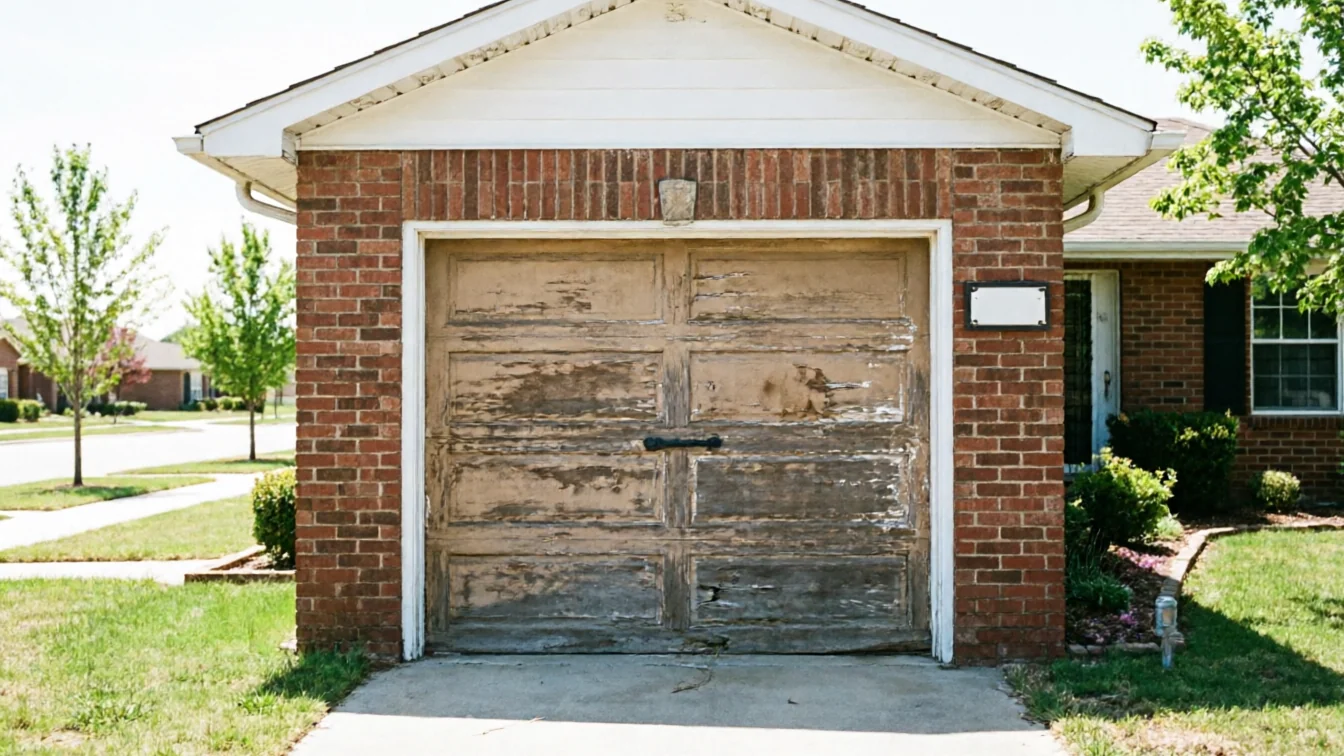
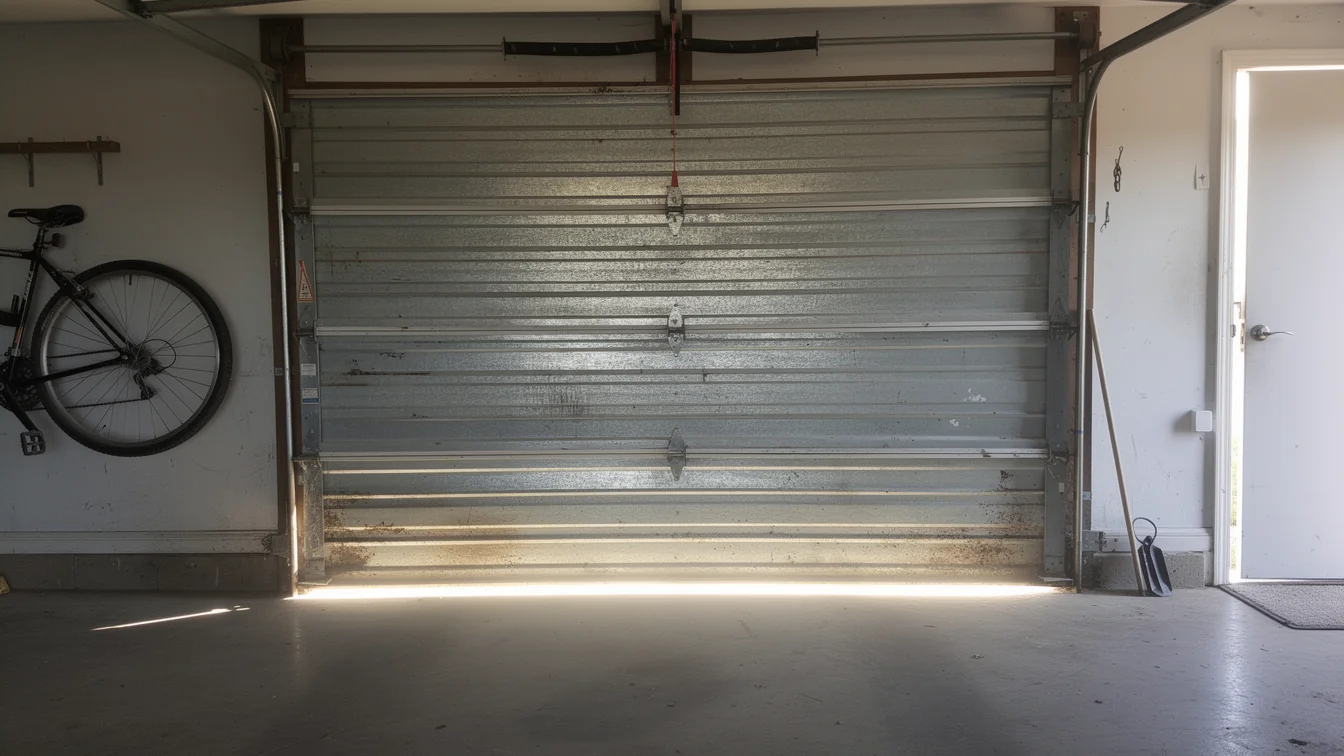
A grinding, popping, or banging garage door is the hardware telling you something specific, not just making noise for the sake of it. In Leander, most of the housing stock went up between 1975 and 2014, with the median build year sitting around 1999, and the bulk of it clustered in the 1980s and 90s across the fourteen named subdivisions that make up this area. That matters because doors installed in that window are now 25 to 45 years old if nothing's been swapped, and the factory hardware - rollers, hinges, the torsion spring, the cable drums - has a service life measured in cycles, not years. A popping sound on the way up is usually a spring losing tension unevenly. A rhythmic thump is almost always a flat spot on a roller. A metallic shriek at the top of the track is a hinge pin that's worn its hole oval. None of these fix themselves, and all of them get louder and more expensive to ignore the longer they run.
Doing Nothing For Now
You can live with a noisy door for a while - plenty of people do. But a noise you're tolerating today is wear you're financing tomorrow. A grinding roller keeps grinding, and it scores the track as it goes, which turns a $20 roller swap into a track replacement. A spring that's starting to sound off-balance is shedding coil tension unevenly, and when it finally lets go, it goes all at once, usually taking a cable or a bottom bracket with it. With housing in this area mostly dating to the 80s and 90s, a lot of these doors are coming up on hardware that was never upgraded past what the builder put in. Waiting doesn't make the part last longer. It just moves the failure point from a scheduled visit to a Saturday morning when the door won't open and the car's stuck in the garage.
What Local Conditions Do
Leander sits in a mild climate band with some freeze risk, which is gentler on hardware than a true hard-freeze region, but it's not nothing. Metal still contracts in the cold snaps and expands again once temperatures climb back up, and that repeated cycling works on anything that's already a little loose - a hinge pin, a roller stem, a spring coil. It's not the dramatic failure you'd get somewhere with real winters; it's slower, and that's part of why it goes unnoticed until the noise shows up. Houses built across the 1975-2014 window, especially the 1980s and 90s batch that makes up most of this area's stock, were built to the codes and hardware standards of their decade, and those standards didn't anticipate forty-plus years of thermal cycling on the same springs and rollers. The noise is often the first sign that the metal has finally worked itself loose enough to move.
What It Costs
I'm not going to quote you a number here, because the honest answer depends on what's actually making the noise - a roller job and a spring replacement are not the same bill, and I haven't looked at your door. What I can tell you is that noise diagnosis is usually quick: most of these sounds point to one or two parts, not a whole system failure, if you catch them early. Where it gets expensive is when a small noise gets ignored long enough that it damages something next to it - a worn roller eating into a track, a weak spring putting extra load on an opener that then burns out trying to compensate. The honest limitation: if your door is original to a house built in that 1980s-90s stretch and you're hearing more than one kind of noise at once, I'd rather look at it in person than guess over the phone, because stacked wear on that much hardware is hard to price sight unseen.
Talk to a local pro
Garage door trouble in Leander?
Same-day service with honest, upfront quotes.